AI can't fix something that's already broken. Test it on a system that already works.
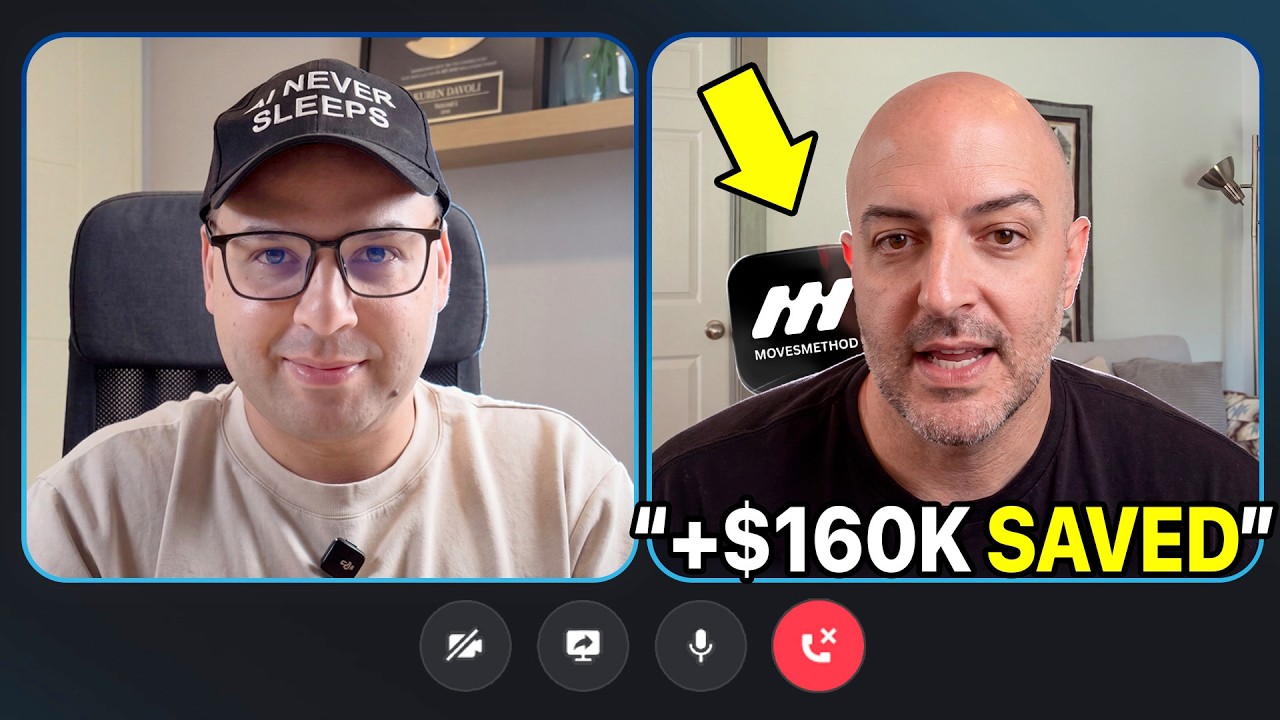
I was a guest on episode 76 of the Scale You Podcast with Le-an Lai Lacaba. We met in person at events before, so this one felt like a chat between friends.
We covered how I got into AI, the first test that made me go all in, and the rules I follow with every client. Here's the written version, in my own words. Thanks again, Le-an, for having me.
Before AI: three countries, three lives
I was born and raised in Italy. In high school and university I organized events in nightclubs and private parties. That was my first taste of running something on my own.
In 2013 the opportunities in Italy didn't look exciting. So I took a one-way ticket to Australia and stayed about six years. I worked in hospitality and ended up managing a deli in Sydney, with a team of 15 people.
I was on my way to residency. Then the business closed down, and I had a 90-day window to reinvent my life again.
I chose to leave. I went back to Italy for about a year. I had friends doing well online, and I told them: teach me what I need to learn. For one year I went all in on online marketing, sales and operations.
In 2020, right when Covid hit, I launched my first online coaching company. My American partner was the face of the business, in the trading space. I ran the back end. We ran it for about five years.
Why systems pulled me into AI
In those five years I learned a lot across every part of a business. One part I found I really love: workflows and systems.
It makes me itchy when something isn't fixed. I like everything organized and running as a system.
So when I saw what AI could do across operations, and really across every department, I thought: this is what I want to do for the next decade.
I tested AI on my own business first
At the time, my partner and I were already talking about winding the company down. I was looking for what came next, and AI was the obvious answer.
During that transition I had a luxury most people starting an AI business don't have. I could test everything inside my own company first. Most of the systems were already running. So I started adding AI on top: voice agents, scoring systems, copywriting, all of it. The results were good.
The voice agent test that changed my mind
We had a database of people who had bought from us over those five years. We took a segment of about 3,000 of them.
Then we built an AI voice agent to do what our human appointment setters used to do. Call past clients. Reactivate them. Ask if they were still interested in trading, and if they wanted to upgrade to a deeper coaching program.
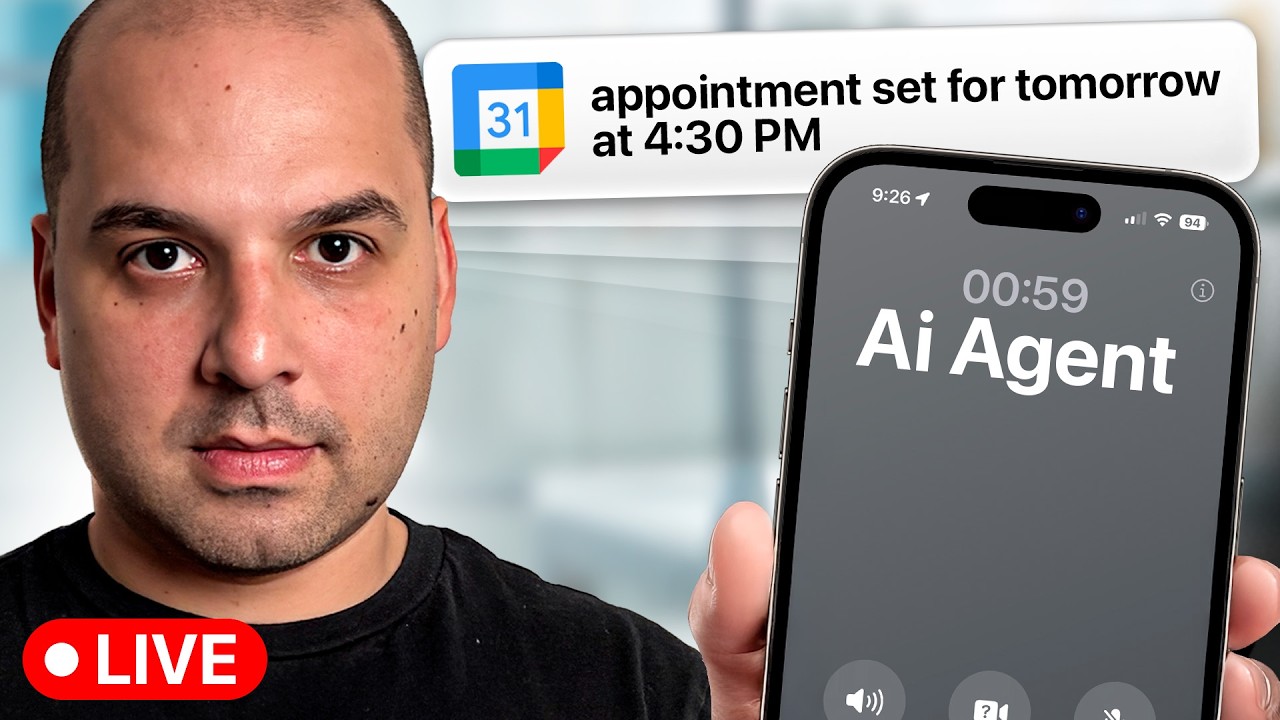
We already had the script and the process. The agent called leads on its own, ran the qualification, and booked appointments straight into the calendar. When a call didn't reach the booking stage, it passed notes to the human sales team.
In two weeks it booked 22 appointments. Two of them turned into sales.
That was a list nobody would have touched again. A lot of business owners sit on lists like that, because old leads are hard to follow up. For me, that small test showed what the future looks like. I wrote up a version of this test in how an AI voice agent worked our old leads.
Voice agents were my focus for the first few months. We still build them for clients. Now the offer is broader, and it's all for one industry: coaching and consulting businesses.
The rule: a proven system first
This is the mantra I keep repeating. You need a system that already works, with results and KPIs. Then you test what AI can do against it.
Here's how that plays out with a client:
- We start with an audit. Depending on the size of the business, it takes one day up to a week. We go through the systems they run in each department.
- We focus on what already works. Systems that already get results, ideally with KPIs we can measure.
- We rank by leverage. At the end of the audit we build an opportunity matrix. Every system we could automate, in order of what moves the business most.
- We flag what isn't ready. Some systems could be automated one day, but they don't work yet. We tell the owner, and we don't automate them.
A common example: a client has good inbound sales and wants outbound with AI. I say no.
I often offer guarantees. I'm not going to guarantee something that isn't proven yet. So first, get a human to do it. When it gets repetitive and takes too much time, that's when we bring in AI to make it faster, better and stronger.
The build I'm most proud of
Le-an asked about my favorite build. It keeps changing because we move fast. Right now it's a call scoring system for a fitness coaching business.
For them, keeping track of call quality means a lot. Before, it was done by hand, with a lot of copy and paste. It wasted time and it wasn't accurate.
We built something similar to what I had built for the sales team in my old company. The system takes the transcript of each coaching call and scores it against a rubric. The rubric is their quality standard: what a good call looks like and what a bad call looks like.
- Coaches get a report a few minutes after each call, so they know if they did well.
- Leadership gets a clear view of how the team is doing.
- Clients get a better service as a result.
The system saves them over $55,000 a month, and churn dropped from 5% to 2% in about three months. When they told me these numbers during the testimonial, even I said wow. That $55,000 isn't just labor. It also counts what they get back from lower churn.
Then we added a feature to help with renewals, inviting clients to extend at the end of their cycle. That one feature doubled their back-end renewal sales. It became a business of its own, just by adding one feature to a system that already worked.
Now we're doing similar work across all their departments, because they've seen it work. The full story is in how an AI call QC system saved a coaching business $55K a month.
AI changes jobs. It doesn't take them.
Saving hours doesn't mean firing people. The same team now spends its time on higher-level work, and the business is growing. That creates new problems and new opportunities.
In my experience, AI isn't taking the job. It's changing the way people work. People now focus on work that needs creativity and judgment, not copy and paste all day. I think that's for the better.
The hardest build: the outbound voice agent
The call scoring system was a big project. It sounds simple, but running it at volume brings real challenges.
The hardest type of build is still the AI voice agent. You need AI skills and sales skills together. You need to know what to say and what not to say on a call, and how the frame of the call should go. You can build on an existing script, but the AI usually needs tweaks.
And with outbound, you have a robot calling people. Watch it closely at the start, before you go into full production. When it works, it's great. When it doesn't, you need to catch the issues fast. Otherwise it can be a big mess and get you or your client in trouble.
One more thing. Say it's AI straight away. Something like: "Hi, I'm an AI working with this company. I'm calling because you just bought this product, and I have a couple of questions." Framed that way, it's really not a big problem. The warmer the lead, the better. You still want to keep the chances of the AI making things up as low as possible.
My dream project: speed to lead
If a client asked me what to build next, it's still a voice agent. A speed-to-lead agent.
Someone opts into your funnel. Maybe they downloaded a free resource, maybe they bought a product. The agent calls them within 60 seconds. There's that well-known stat that calling within 60 seconds makes the lead worth around four times more.
If you already have a process that works with humans, a voice agent can do wonders here. Humans can't call within 60 seconds, 24/7.
I haven't had the chance to build this yet. When I ran my company, we had stopped running ads, so it didn't make sense. Some clients are interested now. It's also one of the hardest projects to land, because there's still a lot of resistance to an AI calling every new lead.
But once someone trusts the process and it works, there's no competition. If you want to see how an inbound call like this sounds, I showed one in an AI voice agent calling inbound leads in 60 seconds.
Our tech stack is lean
My agency has developers who go deep on the tech. The stack keeps changing, and they're always talking about the newest updates.
Personally, I almost only use Claude Code. I connect it to every tool I use: calendar, email, recording tools, all of it, to work faster. When we want to build software for a client, I often build version one in Claude Code to show how it looks. Then my team takes over.
The tools the team uses most:
- Vercel to deploy what we build.
- Supabase as the database, in pretty much every project.
- Custom code, often in Python.
Last year I was still using Gamma. Now it makes no sense for me. It's faster and better to build custom, and you only need a few tools to do it.
If there were 300 of me: education
Le-an's last question: if there were hundreds of me, what would I change in the world?
Education. A lot of what I know today, I learned by teaching myself online. That's more accepted than ten years ago, but it's still not there.
The traditional education system is very disconnected from what's going on with these new technologies. I don't have the exact answer. But with hundreds of me and the time to do it, I'd go deep on that problem. The new generation needs to learn differently from the way we were taught.
Watch the full episode
The video above is the full conversation. Go subscribe to Le-an's channel for more episodes of the Scale You Podcast.
If you want more from me, I'm most active on YouTube, LinkedIn and Instagram.
-Ruben
Grow your revenue or cut your costs in 90 days. Or you don't pay.
Done-for-you AI systems, the same ones I run in my own agency and build for 7 and 8-figure coaching and consulting businesses. Want them installed for you? Let's talk.