If your quality control depends on how many humans you can stack on top of it, you have a scaling problem waiting to happen.
I sat down with Ben McLellan, client success director at MovesMethod, an online mobility coaching company that has been around for five years. Quality of coaching and client retention are literally his job. Here is what was broken, what we built, and what it did to the numbers.
The problem: quality control that could not scale
Before we started working together, MovesMethod ran quality control the way most coaching businesses do. One leader oversaw 10 to 12 coaches.
Those leaders spent their days reviewing coach messages, listening to calls, and coaching each coach one on one.
Every 10 new coaches meant a new pod. More leaders. More overhead. More cost, growing in a straight line with headcount.
That setup was costing MovesMethod around $15,000 a month in labor. And it was only going to get more expensive as they scaled.
"It was very inefficient," Ben told me. "And two, it was also not very effective. We were spending a lot on a leadership setup in the coaching department that wasn't really having the impact we wanted."
What we built
We built a call QC system that reviews every single coaching call automatically.
- Every call gets transcribed.
- It gets scored against a rubric specific to that call type: kickoff call, regular coaching call, strategic review, or resign call.
- A report goes straight to the coach with exactly what to improve.
- A dashboard shows every call evaluated across the whole team.
Nobody has to sit and listen anymore. Nobody has to write the report by hand.
We built this in phases, because each call type needed its own scoring criteria. Ben's team worked closely with us on how each call should be graded and which category it belonged in.
The results
40 man hours a week saved on QC time, right out of the gate. That number grows as the coaching team scales.
In dollar terms, that is about $15,000 a month in labor saved. And for every 10 coaches MovesMethod adds, they were previously adding roughly $8,000 a month in overhead just to manage that pod, more if you count bonuses and commissions.
MovesMethod went from around 50 to almost 60 coaches. Ben expects the savings to compound by another $8,000 to $10,000 a month at 70 coaches.
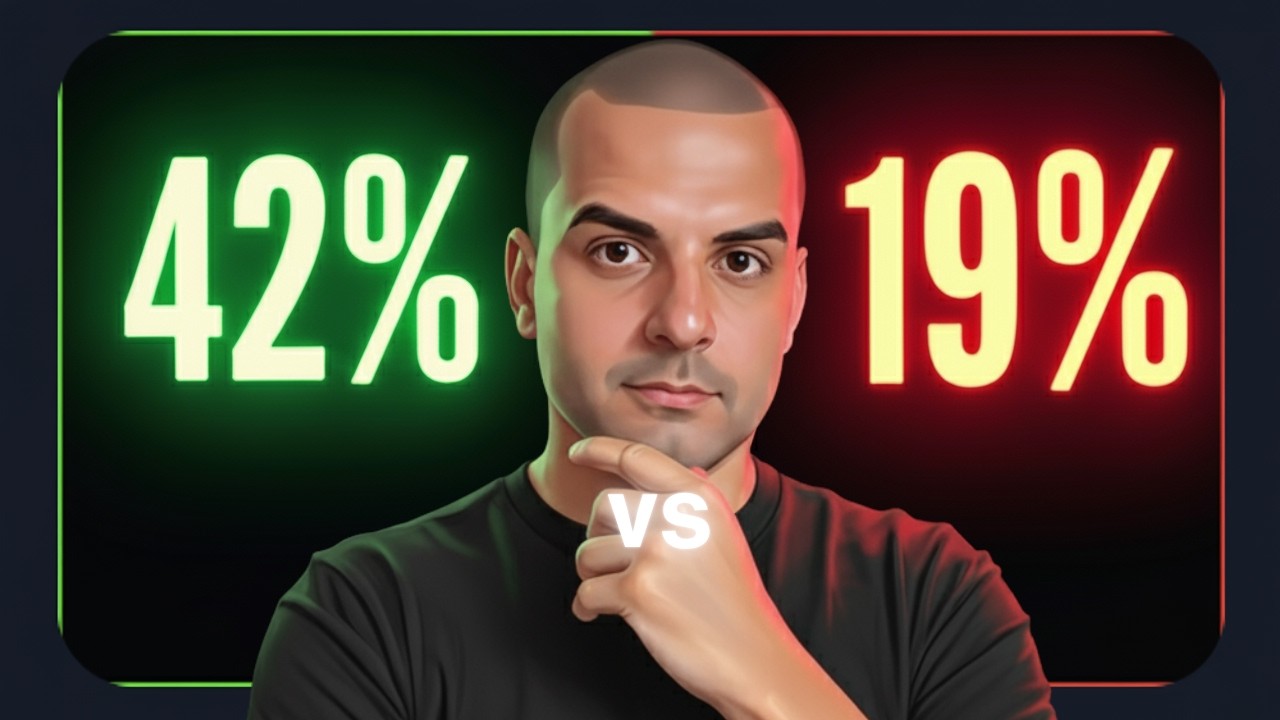
Churn dropped from 5% to 2%
At the start of the year, churn was around 5%, which Ben says is actually healthy for this industry. By the end of August, churn was down to 2%.
A 3% shift in churn at their scale works out to roughly $40,000 to $60,000 a month in saved or recouped revenue.
That is the number that matters. You track call quality because it makes clients happy and makes them stick. This is the proof that it worked.
Resign revenue doubled
We also built a resign process that produces renewal documents automatically instead of manually.
Each document used to take about 30 minutes per client. MovesMethod speaks with around 150 graduating clients a month. That is 75 hours a month saved, on top of the QC savings.
Since implementing the new resign process, revenue generated from resigns has doubled. Ben called the backend offer "an entire business in and of itself" now.
What it changed for coaches and leaders
Coaches now get a report every two weeks automatically, instead of leadership having to chase them down.
"Leadership is no longer a bottleneck," Ben said. "The coaches are loving it. When you're doing four, five, six calls a day, you can lose perspective on what you need to improve."
Leaders freed up from reviewing calls one by one are now using the system for deeper analysis. Ben ran an analysis on clients who graduated in August across 3, 6, and 12 month programs to find the correlation between call frequency and resign rate. That analysis took him almost no time because the system had already surfaced the data.
AI does not replace the team, it removes the bottleneck
Ben was direct about this: "It's not going to be like AI is taking over and taking every human job. It's like how can I use AI to make me and the other leaders more powerful and more effective."
The humans still review the reports with coaches. The system just removes the grind of listening to every call and writing every report by hand.
Why they picked us
Ben talked to a few different companies before deciding. His words: "It's tough because we're in this AI age where everyone's an AI expert. You have to be cautious about that and do your due diligence."
What made the difference for him was straightforward communication. No overselling, no hiding gaps. We were upfront that our track record was stronger on the sales side, and clear about what we believed we could deliver on the coaching QC side.
His advice to anyone on the fence: "Let's do this first project together. Let's date before we marry." Start with one project, see the outcome, then decide on a longer commitment.
The takeaway
If your quality control today depends on adding a new manager every time you add 10 coaches, that cost only grows.
An AI QC system does not just cut labor cost. It catches quality issues early enough to move churn, and it frees leaders to do the analysis that actually grows the business.
If you run a coaching or consulting business and want to know where a system like this would pay off for you, book a call. We will look at your setup and tell you exactly what to fix first, whether we end up working together or not.
-Ruben
Grow your revenue or cut your costs in 90 days. Or you don't pay.
Done-for-you AI systems, the same ones I run in my own agency and build for 7 and 8-figure coaching and consulting businesses. Want them installed for you? Let's talk.